Tuesday, September 4, 2018

Tuesday, Sept. 4

       We got up early this morning since we have a beautiful fynbos garden just outside our door, and it looks over the bay. We wanted to catch sight of the birds, of which I got some photographs. We also sat there and watched whales breaching in the bay.
Couldn't get any internet so we didn't do our daily reading of the Times and the Washington Post. The power actually went out as we were leaving the apartment.
Our first task was to find a bank in Constantia to deposit some money in Lucy's account since we didn't have enough rand to pay her last week (so embarrassing!). Took us about an hour to get to Constantia because we drove over Ou Kaapse Weg, which is Afrikaans for Old Cape Way. It is a mountain pass that connects the southern suburbs of Cape Town with the Fish Hoek Valley. It traverses the Steenberg Mountains. The summit, from which I took photos of the valley in which Constantia is located, is 1,033 feet.
We descended to Constantia Valley, the oldest wine-making region in the southern hemisphere. There are a number of award-winning wine estates. Wine estates are different than wineries, we learned: all the fruit on an estate is used in making wine; a winery buys grapes from others to make wine.
Despite being taken to a weird place by Google maps (we call it BB - bossy bitch), we found the bank location after getting directions (yes, we're not proud) and made our deposit.
Then we headed to Groot Constantia. We chose it because it is the oldest wine producing estate in South Africa, creating award-winning wines for 330 years. "Constantia" is after the Latin word for constancy or steadfastness.
Lots of history, much of which you can find here: https://www.grootconstantia.co.za/#home-history
The renowned Groot Constantia Grand Constance is South Africa's oldest wine and is the finest example of the famous "Constantia Wyn" as drunk by emperors and kings from Frederick the Great of Prussia to King Louis Phillipe of France. Charles Dickens celebrated it in Edwin Drood, Jane Austen's character recommended it as a cure for a broken heart (!) to heroin Marianne Dashwood in Sense and Sensibility. The MOST interesting thing was that Napolean Bonaparte was allowed to drink wine made at Groot Constantia while he was exiled on the island of Saint Helena from 1815 until he died in May 1821.
Okay, so I want to be exiled to Saint Helena because it is a volcanic tropical island in the South Atlantic Ocean 2,500 miles east of Rio de Janeiro. And I want to drink Groot Constantia wine while there. Ha! Actually, Saint Helena is Britain's second-oldest overseas territory after Bermuda. Several other people have been imprisoned there including Dinuzulu kaCeshwayo for leading a Zulu army against British rule and more than 5,000 Boers who were taken prisoner during the Second Boer War.
We didn't try Grand Constance during our wine tasting, probably because it's still the wine of emperors and kings - not common people.
I do need to tell you that as we drove through the estate, there were warning signs about baboons (there's signs in Simon's Town warning people of golfers). We had read earlier that seven baboons were legally hunted and killed by winemakers because they were raiding the vines and restaurants. We did not see a baboon, unfortunately, but Groot has not applied for a hunting permit that would allow two baboons to be killed a day. Groot assured the public they do not use lethal force to control baboons but they don't monkey around - they have baboon monitors (as does the apartment where we're staying). Groot actually is an official World Wildlife Fund (WWF) Conservation Champion.
On to wine tasting - we got our own wine glass that, of course, is not coming home with us because of the restrictions on luggage when we get to Durban. I'm a red wine fan so I tried all the red wines except the shiraz. Beth tried several white wines. By the time the tour started, we were feeling pretty good.
Then the tour began and we climbed about three stories of stairs to get inside the winery. We definitely needed to use the handrail. The tour was interesting, especially if you're a wine connoisseur. We are not connoisseurs but learned a lot, too much to convey in a blog. We did learn that there are no indigenous grapes in Constantia Valley but Groot's grapes are of French origin, and they buy French oak in which to keep their wine. The most pressing thing for me was whether it's better to get a wine that is corked or a wine that has a screw cap - and I was assured that the screw cap actually is better because it seals the wine, and corks could let in air that molds the wine. Ha! Suffice it to say that we know more about winemaking than we did before the tour.
We proceeded to the Jonkershuis restaurant (Young Man's House) on the estate to eat lunch because it was the "relaxed" restaurant on the estate. We started with Ostrich Carpaccio.
It was delish. We saw Ostrich steaks in the grocery store the other day, and we're hoping to actually grill them on a braai when we get to our Hermanus whale-watching cottage. I got the pork belly roast, and Beth had a salad with toasted apples, arugula, toasted walnuts, fennel and some really good goat cheese. And, of course, we each had a glass of wine.
We were very contented.
We didn't walk around much, as the weather was getting ugly. The wind was really strong, which made it feel a little chilly. Can't even imagine what's it like living here during the middle of winter when the winds are apparently ferocious!
So we drove leisurely back to Simon's Town along the coast, stopping only to take some photographs. We did walk around the marina in Kalk Bay where there were several fishing boats.
It began sprinkling just as we arrived back to apartment, and it got really, really ugly. Strong winds (not gusty but constant), and we couldn't see beyond the road below us to False Bay.
This evening, we put into practice water conservation, savinig the dish water to use to flush the toilet.  Our hostee here, Marie Louise, suggested we do that if we were willing and we are. And thank goodness, we have a propane heater!
By the way, the warning about golfers was not because they (we) are dangerous like baboons, but because the course crosses the road.
Why did the golfer cross the road?  Hah. :)

Looking out over False Bay early in the morning.

This is a Cape White-eye.


Don't know what this bird is - it resembles a cardinal with a little tuft but it has an extremely long tail and, of course, it isn't red. Duh.

Some kind of caterpillar - there were tons of them in the tree.

Constantia Valley from the summit of Ou Kaapse Weg in the Steenberg mountains.

Someone working the vineyard in a tractor at Groot Constantia.

Beth's first glass of wine at the wine tasting (before she got a little tipsy). 

Barrels of Groot Constantia Chardonnay.

These are the stainless steel vats in which they make the wine.

These are 500-litre barrels of red wine. They are kept in the basement at a cool temperature and low light to help keep the wine's temperature steady.

This is one of the buildings on the estate that houses the Jonkershuis restaurant (Young Man's House), where was ate a delicious lunch.

This is a Glossy Ibis that roams the lawns of Groot. It also likes areas in which sewage is located.

These are cabanas we spotted on the ocean between Muizenberg and Kalk Bay. I think we'll see the more iconic ones Thursday when we head to Hermanus.

A guy paints his boat in the harbor at Kalk Bay.

A colorful boat in Kalk Bay harbor that has cages on it, maybe for trapping lobster or crabs.

Some kind of albatross that was hanging around where they cleaned fish in the Kalk Bay harbor.

The end of the wharf guarding the entrance to the Kalk Bay harbor where the fishing boats are moored.


Monday, Sept. 3

       Well, it's Monday. We got up and went to the pharmacy to get some malaria meds because mine disappeared. We think they rolled under an airplane seat when the zipper in my backpack came undone - I got all my other meds (yes, I'm old, I have meds for heart, cholesterol). :
We loaded up the car, looking forward to getting out of the city into the countryside. I drove from the parking lot to the front of the hotel so Beth could run in and leave the key. I hit the frickin' curb - haven't driven enough to get that depth perception on the left of the vehicle from where I drive on the right. I put a pretty good cut in the tire - drove a block before I realized it was flat. So, at 10:15 a.m., we're calling Hertz. Have you tried changing the tire? Ha - Beth told them we were two old ladies and needed someone to change it so they connected us to the garage. Thank goodness, we purchased full insurance coverage and was advised that the torn tire was covered. Ha!
Less than 20 minutes later, a white guy wearing a suit arrived. He had some difficulty with the jack because it was a brand-new car and the jack had never been used but he got it, changed the tire and we were off within an hour after having called. AND, Hertz gets 100 stars for service because they changed out the car for us, arriving at our accommodations in Simon's Town about 6:30 p.m. with a different car, so we'd have a spare in it!
It was so good to get out of the city and start seeing the landscape. We drove through Camps Bay on the way to the Western Cape Drive. You can rent "luxury villas" at Camps Bay; it's safe to say, it is a very affluent suburb. The first residents, however, were the San (they were hunter gatherers) and the Goringqhaique, Khoi pastorates. There's a complex history but the road we drove from Sea Point to Camps Bay used convict labor. The beaches here are white sand.
We continued to Hout Bay, which is situated in a valley on the Atlantic seaboard of the peninsula and is about 20 kilometres south of the central business district of Cape Town. It was here that good timber was found for construction of ships and other purposes.
Then we drove the Chapman's Peak Drive. Much to our surprise, it was a toll road. It was beautiful. It was named after John Chapman, the Captain's mate of an English ship, the Consent. There is a history to the road, of course, but it was "cleverly planned with the road surface based on the solid and conveniently located 630-million-year-old Cape Granite contour, while the many roadside cuttings were carved out of the more workable Malmesbury series sediments." It was built with - yes - convict labor. It took seven years to complete, at a cost of ₤20 000. It opened in 1922. The drive was closed in 2000 because of landslides and several accidents from falling rocks that either paralyzed folks or killed them. After intensive design and reconstruction, Chapman's Peak Drive was re-opened to traffic as a toll road in 2003. There were other closures due to a lot of rainfall and in 2008, the drive was closed for major upgrades and repairs. The construction work took over a year and was eventually re-opened in 2009. Chapman's Peak Drive is known as one of the world's most scenic drives.
We could not stop at the peak.
We arrived in Simon's Town around 1 p.m. and checked in before going to get groceries. We stopped and ate some delicious prawn peri-peri and black mussels at a little restaurant on the ocean front - and we saw whales! They weren't close but with our binoculars, we could see them breaching. We're hoping at our next stop in Hermanus we can see them closer from the shore.
We dropped off our groceries and headed to Boulders Beach where there is an African penguin colony. We got about 30 minutes to wander around because the parking lot was closing, and there they were - very close, and they didn't seem to mind our presence. There are small coves and beaches interspersed between boulders of Cape granite (which are about 540 million years old), and the colony of African penguins have been here since 1985. There are now about 3,000 birds. These penguins are only found on the coastlines of Southern Africa, and they currently are on the verge of extinction so they are under the protection of the Cape Nature Conservation. There are only three penguin populations on the mainland in southern Africa: Boulders Bay, close to Hermanus at Stoney Point, which is our next stop, and Betty's Bay. We saw several rafts of penguins coming in as we were leaving.
More about Simon's Town later. We know that it was one of the places from which thousands of coloured and black people were removed to townships (although there is nothing mentioned about this in the literature), and it is home to the South African Navy. What we saw of the architecture is, well, Dutch colonial. We'll explore it later after we visit Constantia winery tomorrow.
The place in which we're staying is really high on a mountain overlooking Simon's Town, and there is a beautiful fynbos garden that we enjoyed as the sun set. Our hosts are avid birders, and there are a variety in the garden. I'm hoping to get up early tomorrow to photograph them.
After Hertz delivered our car, we made boboti (pronounced b'boit-ti). It was like a souped-up meatloaf with lots of spices, chutney, almonds, bay leave and eggs. We ate it with basmati rice and green beans, both of which we could microwave. Woohoo!

This is how our Monday started, just a block from our place in Cape Town. I ran into a curb outside the front door and ripped the tire. The tire was changed within an hour, and Hertz actually brought us another vehicle later in the evening so we would have a spare tire. It was great service because we would never be able to change the tire properly (Beth told them we were two old ladies as a plea to get someone else to change the tire!)

This photo is from Audley, the tour company that's taking us on safari. You can see the soccer stadium. We drove by the stadium and rounded the Cape to the right in order to get Simon's Town. The farthest mountain is about where we're now staying. Constantia is behind Table Mountain.

This is looking back to Lion's Head from the Western Cape Drive.

This is looking south on the Western Cape Drive.

This is Hout Bay from just under the summit of Chapman's Peak on the Chapman Peak Drive.

This is backside of Table Mountain. We suspect it is part of the 12 Apostles.

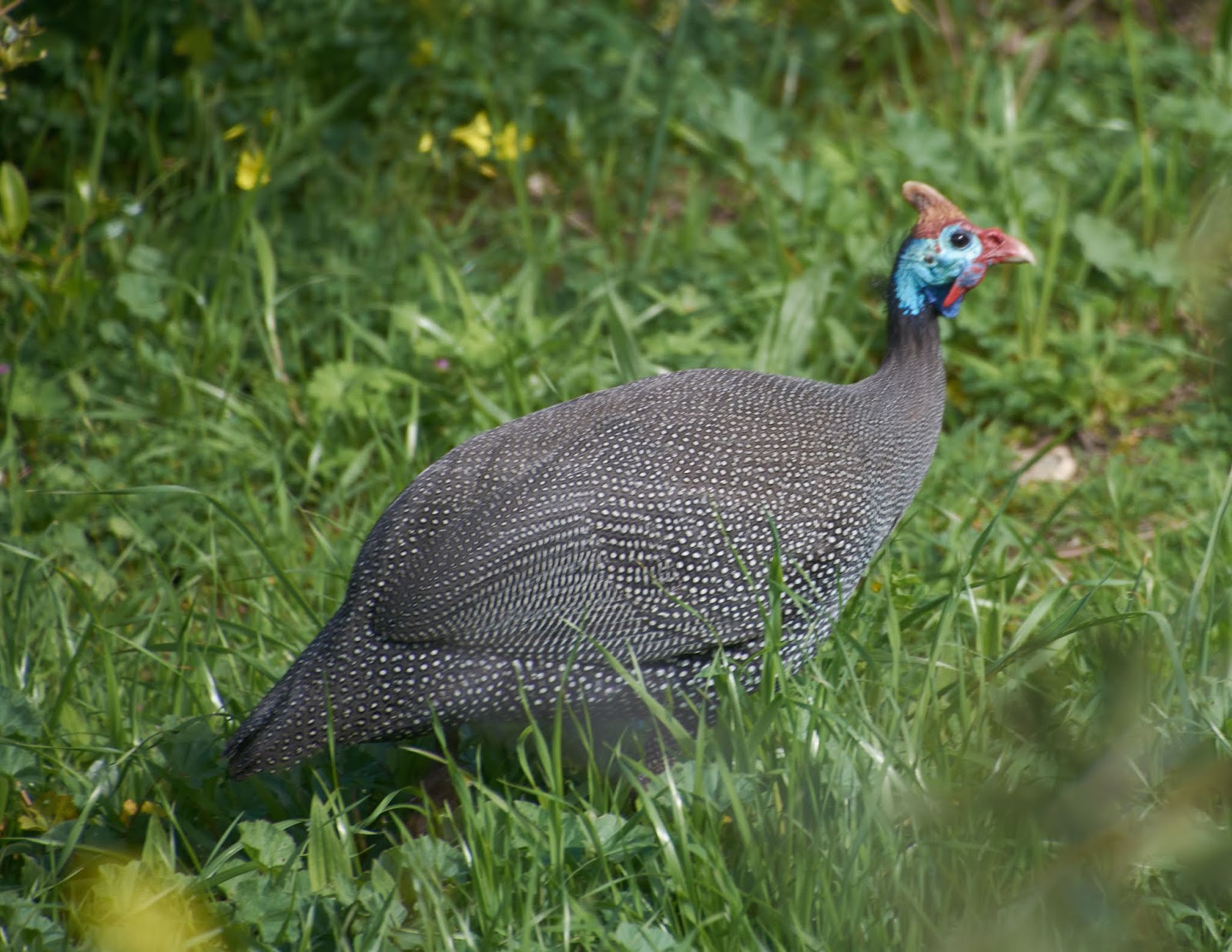
This is a helmeted guineafowl. They're very large and very noisy. We saw some in the fynbos garden at our place in Simon's Town.

These are African penguins coming ashore in the evening to make their way to their nests. They actually come on shore in a raft, just like the Blue Penguins in New Zealand.

This is Fred, an African penguin. Ha!

The sun setting over Fish Hoek, which is north of our place in Simon's Town.

This is looking across False Bay at sunset to either Strand or Gordon's Bay. We'll see those villages on Thursday when we head to Hermanus.

This is our boboti. Doesn't look appetizing but it actually was really good.


Sunday, September 2, 2018

Sunday, Sept. 2

        Today was a down day. We were up until midnight last night after the show, doing my blog and editing photos, so we slept in.
We only ventured to the grocery store to get something for supper tonight, watched the WNBA game between Phoenix and Seattle that was played Friday (Phoenix won, so they're still in the playoffs).
So we thought we would take the time today to reflect on some of our observations about where we've been the last two weeks - Doha and Cape Town.

Doha:
        It was hot, very hot. The best time is after the sun goes down, and that's when people move around by visiting the souq and celebrating.
        Alcohol does not flow in Doha, as it is a Muslim country. Foreigners must get a license to purchase alcohol and that is circumscribed, i.e. you can only purchase so much - and you have to drive directly back to your home after purchasing it.
        Visiting the souq at night was cool because it's more comfortable, temperature-wise, and people were out enjoying themselves. The variety of goods to purchase was amazing.
        It is a very harsh climate and countryside, something with which we're not comfortable nor used to experiencing.
        It was nice being included in Maria's circle of friends, all of whom are well-traveled and interesting.
        The country definitely is rich, as evidenced by the massive amount of construction as well as the State Mosque, the Aspire Zone, the National Library and the Museum of Islamic Art. And the palaces for the monarchy as well as the monarchy's private airport terminal.
        The Quatari people don't work; they are supported by the monarchy, and all the work is done by foreigners.
        Being a Muslim country, we heard the call to prayers five times each day from each mosque.
        The swimming pool at Maria's complex was a welcome antidote to the heat.

Cape Town:
        There is a lot of security, albeit very subtle. They don't carry weapons but they do carry batons. For instance, there is a security person stationed in front of the small shopping mall where we bought groceries who made sure only the "right" people entered. The first Sunday we were in Cape Town, we went to the grocery store in the complex, and there were several panhandlers in front of the store. Security made sure they didn't harass people. And every store that we visited, there was security roaming around.
        There is a lot of homelessness, some of which was very evident in the Company's Garden and around the Parliament area but we also saw it in the portion of town where the District Six Museum is located. Many were sleeping in tents, others had no visible shelter but had set up shop on the street with whatever belongings they possessed. Often, the police would tell them to move.
        It is a very diverse city, a little shabby around the edges and then, well, there are the townships. We heard from several different people that times are hard right now. It is a city, however, with lots of traffic and noise. We were happy to be footin' it most of the time instead of driving. The causeway we can see from our balcony is pretty much stopped traffic at the peak of rush hour. So we're happy to be leaving so we can experience nature and the more relaxing kind of things, although we'll be more in the colonial, i.e. white environment.
        Everybody has been so warm, friendly and helpful. Almost everyone with whom we've come into contact is black African. The only white people we see, really, are what we believe to be tourists.
        We successfully avoided all the touristy things we thought would be an ode to colonialism and sought out the histories of those who have been oppressed - and we learned a lot.
        We've been introduced to some African food, most notably at Gold Restaurant, but we bought some biltong on which to munch. It's like beef jerky - it's dried and cured meat that originated in Botswana, South Africa, Zimbabwe and Namibia. Various types of meat are used to produce it, ranging from beef to game meats. They are spiced and very salty. There was an African deli section that we noticed today after we bought our supper. It had ostrich, which also was in the meat counter. Don't know how to cook ostrich but I suspect I'll learn so I can grill some when we're in Hermanus.
We got spices and a recipe for bobotie, a well-known South Africa dish consisting of spiced minced meat baked with an egg-based topping. We'll try making it later this week on our road trip.
We're very conscious about how much water we use. Apparently, citizens are restricted to 50 litres of water a day but there are no such restrictions for us or tourists. We used bottled water mostly and used the water in the apartment only for coffee, showers and laundry.
        Cape Town is a large, sprawling urban center but regardless of where you are in the metropolis, you always can see Table Mountain, which is absolutely breathtaking.
        It's much cooler than we expected but it's been comfortable, and we've survived.

        We're moving on tomorrow to Simon's Town, which actually is the farthest suburb of Cape Town to the south. We'll drive down the western coast to get there. We've been told there won't be many places to stop, as the pull-overs are on the right side of the road and, well, we're driving on the left side going south. So, we'll see what opportunities we get.
        Hopefully, we'll get to go to Boulders Beach after checking into our abode for the next three nights. Boulders Beach has been the site for a colony of African penguins since 1985.
        No photos today, sorry! :)


Saturday, Sept. 1

Another beautiful day in the Mother City. We walked over and got our car today. It's a brand new Ford Fiesta, cute little hybrid bugger. It didn't take long for me to remember how to drive on the left side of the road, as I did it while we were New Zealand. I was grateful, however, that it was a weekend day because traffic wasn't bad. They drive a little fast and crazy here but I can drive with the best of them!
We drove our little Fiesta out to Kirstenbosch National Botanical Garden so we drove around the mountain to the eastern slopes of Table Mountain. It still looks spectacular from the other side. :
We first took a shuttle tour of the gardens so we could see what area in which to spend our time. We couldn't hear a thing the tour guide said because we were in the back of a golf cart, a noisy diesel cart. Oh well.
We then wandered the garden for the next three hours. And, as you can see, I stalked some of the birds! :
Kirstenbosch is acclaimed as one of the great botanic gardens of the world, and it is beautiful. It is the flagship of the South African National Biodiversity Institute, which was established in 1913 to conserve and promote the indigenous flora of southern Africa. The estate covers 528 hectares and includes a cultivated garden and a nature reserve. The developed garden displays collections of southern African plants including many rare and endangered species. We visited several of the themed gardens: the Fynbos Garden, the Fragrance Garden and the Protea gardens.
The garden is home to 7,000 plant species under cultivation (few of which we have ever seen), 450 species of trees, important scientific collections, and world-class cycad collections.
As I mentioned earlier, indigenous people visited the area a long time ago, as Stone Age tools have been found near the spring in the Dell in the heart of the garden. The Khoi made the Cape their home before any explorers arrived, and they probably visited the area in which the garden is situated to gather medicinal plants, food and wood. When explorers did arrive, they encountered large groups of the Khoi who had made the Cape part of their annual migration route. One group was the Goringhaikwa people, who arrived every October in a large group with their flocks and herds. Their campsite was the present-day suburbs of Rondebosch and Claremont, a stone's throw from the garden's location. Access to the garden area became more difficult for the indigenous folks on account of Jan van Riebeeck establishing his estate.
Van Riebeeck, as you recall, was the first commander of the Dutch East Indian Company in the Cape. The first recorded account referring to the area was written by van Riebeeck when he mentioned that he had surveyed the forest in 1652.
The property changed hands several times in the 1800s. It wasn't until the Union of South Africa was established in 1910 that Dr. Henry Pearson, a professor of botany at the South African College, started putting the wheels in motion for the establishment of the botanical garden. In 1913, Sir Lionel Philips put forward a resolution to Parliament that Kirstenbosch should be the home of the National Botanical Garden. Pearson became the first director, J.W. Mathews became the first curator.
The garden currently is in the hands of Philip le Roux who has been curator since 1999. He has surrounded himself with a capable and devoted team of approximately 130 people - horticulturalists, administrators, collectors, grounds people, guides and other specialists. Our time there was well spent, as they have developed a perfectly wonderful place.
We came home and ate something and then we were off to the Institute of Creative Arts Live Art Festival at Hiddingh Campus of the University of Cape Town. It was the first of 16 days of the festival. It is Africa's eminent performance art platform, and features some 40 cutting-edge works. It was not a tourist thing so we got a feel for Cape Town that featured artists, alternative types and students.
I did not take my camera, as I want to honor the artists.
I'll do my best to give you some sort of idea of what we saw.
All the events are free, and there was plenty of free wine of which we partook while waiting for the first performance, which was by Sethembile Msezane. It was titled "Signal Her Return III." Sethembile was born in KwaZulu-Natal and raised in Johannesburg (Joburg), and completed her BAFA and Masters in Fine Art at the University of Cape Town. She describes it as "an installation/prayer commemorating women who have died under undignified circumstances." You can see how the space was designed here: http://www.sethembile-msezane.com/signal-her-return-iii/2018/6/1/signal-her-return-iii-2018-nirox-femicides-domorethanprayer-sethembilemsezane-rememberher-herstory-amen-meditation-1 She moved through the space with a black covering and hat, while a voiceover was reciting  a monologue about rape, especially rape of black women by white men, and women who have been murdered. At one point, the voiceover provided names, which we assumed were women who were murdered. The name was repeated twice, then the word "remember," at which point Sethembile would ring a bell. It was an interesting piece.
We adjourned and went to another space, and there were free finger foods and free wine there! The performance was fully booked so we stuck around, hoping to get a seat. I approached the Institute of Creative Arts Director and curator of the festival, Jay Pather, and we visited briefly. We told him about our dilemma so we got seats. Ha!
The performance, by Albert Ibokwe Khoza and Robyn Orlin was titled "And so you see," and it was for African people, as it contained a lot of references and language we did not understand.  But we got some of it, I think. Albert was wrapped in sheaths of white cloth when the performance began. After the cloths were removed, you could see his body was wrapped in cellophane. He sat in a large chair facing the back of the stage where there was a videographer so you could see the front of him in the projection. We thought maybe the cellophane represented the suffocation of apartheid. He eventually shed the cellophane and, at one point, selected two white people from the audience to wash him after having eaten oranges (don't know what the oranges represented except maybe bodily pleasures). Anywho, it was quite striking to see two white people bathing him as you would royalty. There was more but it is really difficult to describe so I'll let him do so. You can hear him describe it and other things about himself here: https://www.youtube.com/watch?v=io1hmX9PlaM&list=PLW39SIhEiWw4puHIfYhLgqJKxf6mfe0PR If you're interested, you can get a sense of his work by watching part of his performance at the first festival in 2014 here: https://www.youtube.com/watch?v=lcS-jrjS8q0
There was no wine when we emerged from the second performance to wait for the final performance of the evening, which was a live music performance by FAKA. Okay, so FAKA is a performance art duo and a cultural movement established by Fela Gucci and Desire Marea. Well, it wasn't our thing - or not this particular performance. We entered into a room that was full of haze (well, it's smoke, actually). They were dressed more like gangsters, wearing full-length black puffy jackets, and all they did was a stylized grunt and groan thing. We didn't stay long. You can see them and read about them here: http://www.siyakaka.com/about-1/ And, actually, this performance on YouTube (they're voguing) would have suited us much better: https://www.youtube.com/watch?v=xHCN8bynfF0
         I took numerous photos in the gardens. Hope there's not too many! Enjoy them.
       
People enjoying the gardens.

This is a pincushion, which is a genus that has 52 species, most of which are found in the Western Cape. They feature stiff, protruding styles of flowers and are an excellent source of nectar for birds.

We think this is Rudbeckia Cappuccino but we're not sure. There was no marker identifying them. We just thought they were beautiful. 

This is a nerine sarniensis, also known as a Nerine Lilly. It is part of the amaryllis family, and it's a rare flower.

Your standard Bird of Paradise. LOL.

This is the bloom on the Cape Stock Rose Tree. I couldn't find any more information about it.

This is the Broom Cluster Fig tree's (Ficus sur) fruit, which is supposedly rather tasty if you can find some fruit that hasn't yet been infested with insects; it is eaten fresh or sun-dried. We didn't try any of them. The young leaves are cooked and used as a relish, and the fruit is much loved by birds, bats and monkeys. Apparently, it's a very useful tree besides bearing fruit. The wood from this tree was used for furniture and drums as well as for the brake-blocks in ox wagons. Latex from the tree is used for medicinal and veterinary purposes with the bar being used for traditional medicine. The tree also is a larval food plant for butterflies.

This what is called Camphor Lane. These are Camphor Trees that are native to Eastern Asia, and they are invasive in Kenya and Tanzania. As you can see, it's a large and spreading tree, often growing 15 to 30 meters high. The rough bark is light brown or greyish-brown n color, scaly or issued, and is highly aromatic. They have flowers and fruit but we think it was too early in the spring for them to flower and fruit. It's still "winter" here, technically. The tree is cultivated for camphor, which is used as a culinary spice, a component of incense and as a medicine. Camphor also is an insect repellent and a flea-killing substance. it has been listed in the Global Invasive Species Database as a noxious weed in South Africa.

This is a clivic miniature, some of which has bloomed, some of which hasn't bloomed yet. It is a species of flowering plant in the genus Clivia of the family Amarylidaceae, native, growing in woodland habitats in South Africa as well as in Swaziland. It contains small amounts of licorice, making it poisonous.

This is a Cobra Lily, which is endemic to the Cape Floristic Region, a hot-spot of plant diversity in southwestern South Africa. This yellow cobra lily variety is found at only a few locations,outside the gardens, in the vicinity of the small town of Darling. It is classed as rare on the Red Data List of Southern African Plants.

This is a donkey ear plant, also known as Kalanchoie Gastonia bonnier, that originates from Madagascar. It has leaves resembling the shape of a donkey's ear, as you can see. The plants are succulents, and they produce brightly colored blooms that are known to attract insects and nectar-seeking birds. Again, too early to see it's blossoms.

This is the fire lily clivia miniature. It's also known as the South Africa Lily. It is native to damp woodland habitats in South Africa as well as Swaziland, and are always found under tree cover in evergreen forests.

We don't know anything about this flower.

This is a Golden Vygie, which is a vulnerable plant. It is part of the Lampranthus genus, and it is a perennial succulent indigenous to the Western Cape. It has no medicinal or traditional uses but the most attractive aspect of the plant is its unbelievably bright orange flowers. 

This is a Pelargonium, a genus of flowering plants that includes about 200 species of perennials, succulent and shrubs known as geraniums. But geranium is the botanical name of a separate genus of related plants. This species is an evergreen perennial indigenous to temperate and tropical regions of the world, with many species in Southern Africa. They are drought and heat tolerant but can tolerate only minor frosts. it is native to Southern Africa, which contains 90% of the genus with only about 30 species found elsewhere.

This is a Key cycad, a medium to large cycad that is distinguished from other Encephalartos species within its range by its closely crowded and overlapping bluish-green leaflets. Although woody in appearance (see below), like all cycads, the stems are mostly comprised of soft, pithy storage tissue protected by a solid layer of old leaf bases. The cycads are remained relatively unchanged for millions of years. In fact, the cycad portion of the garden featured a variety of different cycads as well as sculptures of dinosaurs because the dinosaurs probably ate cycads.


This a Queen Protea. Protea is a genus of South African flowering plants, sometimes also called sugarbusshes or Fynbos (pronounced fain boos). In local traditions, the Protea flower represents change and hope. The King Proteas is South Africa's national flower. Evidence from pollen fossils suggest the ancestors of the family to which Proteas belong grew in Gondwana 75-80 million years ago. Ninety-two percent of this species occurs only in the Cape Floristic Region.

The red flower is a Rooistompie. The yellow is a pincushion.

This is the bloom at the Waratha Tree, which actually is an Australian-endemic genus. This bright red flower is the New South Wales state emblem.

This is a wild iris.

T
This is one of many sculptures found throughout the gardens.

This is brown, seed-eater. Couldn't find him in any identification charts. :)

This is a Cape Robin.

This is a Cape Sugarbird.

This is an Egyptian Goose.

This is another orange-breasted sunbird feeding on a pincushion.

This is a Southern Double-collared Sunbird.

This is a Spotted Eagle Owl that was just sitting perched on a rock as we passed.